 Disclosure: This post contains affiliate links, and if you click on them and purchase a product, we will receive a small commission at no extra cost to you. Goodpetparent.com only shares products that we strongly believe in and feel would be beneficial for our readers.
Most dogs love to run, whether it’s chasing squirrels through the yard, frolicking with other dogs in the park, or trotting down beautiful stretches of sandy beach. Dogs make great workout partners, and many dogs seem to love running alongside their people, which can also be a great bonding experience. But is running with your dog a good idea?
Fortunately, in most cases, the answer is yes. However, although dogs need daily exercise (and running is a great way for them to get in shape and stay at a healthy weight), not all dogs are cut out for running. Additionally, certain precautions should be taken with any dog who runs to keep him safe and protected from injury.
Below are some Do’s and Don’t’s to keep in mind when it comes to running with your dog.
Don’t assume that your dog is built for running.
Dogs come in all shapes and sizes, and not all of those body types are ideally suited to running, especially for long distances. Certain dog breeds with very short noses and flat faces (such as English Bulldogs, Pugs, Pekingeses, and Boston Terriers) are known as “brachycephalic”. Because their faces are anatomically flatter, brachycephalic breeds have narrower nostrils, shorter airways, and longer soft palates than most other dogs.
This anatomy makes it much more difficult for them to move air into their lungs, especially during exercise or times of stress. Their impaired breathing can lead to a dangerous buildup of carbon dioxide, which in turn can cause life-threatening respiratory distress. Brachycephalic dogs are also more susceptible to overheating and heatstroke.
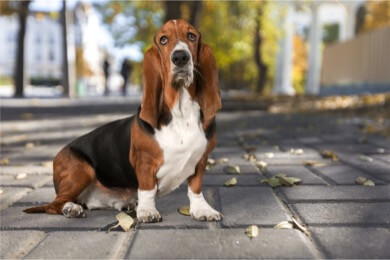
Dogs with short legs and long spines (like Dachshunds, Basset Hounds, and Corgis), may enjoy running, but their stockier build and shorter legs may make it harder for them to keep up. Dogs with very thick coats may be more prone to overheating in warmer climates, while those with very short coats may not be well-suited to running in very cold temperatures.
Do start out slowly.
Just like us, dogs need time to adjust to a new exercise routine, especially if they are overweight. Start out slowly by alternating walking with short intervals of running, then increase speed and distance gradually. Too much too soon increases your dog’s risk of injury.
And remember that we have the luxury of running in shoes; our dogs aren’t so lucky! Running on concrete, gravel, or asphalt can put dogs at risk for injury to their paws. Paw pads in particular need time to toughen up and develop light callouses to protect them; a dog’s paws can become sore or even raw if he runs too far without time to adjust.
Don’t hit the road with a very young or very old dog.
Since young dogs have growth plates (areas of cartilage at the ends of their bones) that haven’t fully closed yet, running on hard surfaces can cause injury and damage to these areas within their joints. This is especially true for large breed dogs, whose growth plates take longer to mature. Depending on the breed, growth plates are not fully closed until a dog is between 18 months and 2 years old. If your dog is still growing, be sure to ask your veterinarian about when it’s safe to start running.
Dogs who are older can suffer from arthritis and/or hip dysplasia, which can make running painful. Certain medical conditions can also make it dangerous for an older dog to run. Since running is a high-impact cardiovascular activity, to be safe, always check with your veterinarian before starting any running program with your dog.
Do take the time to warm up before, and cool down after, your run.
Dogs and humans both benefit from taking the time to warm up before running. Warming up muscles can protect against injuries, so give yourself and your dog plenty of time to work out the kinks. Start with at least a few minutes of walking or slow jogging before you run. And finish your run with at least 5 minutes of walking to allow your dog to cool down and let his breathing return to normal.
Do take lots of water breaks, especially in warm weather.
Remember to bring along water and a container that your dog can drink from, such as a collapsible bowl or water bottle with a special spout made just for dogs. Only give your dog water, never sports drinks, which can cause stomach upset and gastrointestinal problems in dogs.
Since dogs can only sweat through their paws (they don’t sweat through their skin), and are essentially running in full-on fur coats, they can overheat very quickly in warm weather. Watch your dog’s body language for signs that he might be overheating, including excessive panting, difficulty breathing, or a bluish tint to his tongue. If your dog begins drooling, vomiting, seems weak or disoriented, has dark red gums, or is panting so hard he can’t catch his breath, stop running and seek veterinary attention immediately – these are signs of heatstroke, which can be life threatening.
Do take precautions when running in cold weather.
If you live in a cold-weather climate and like to run in the winter with your dog, try to avoid roads and sidewalks that have been treated with salt or ice-melting products. These can damage your dog’s paws and cause stomach upset if he licks his paws once he’s back inside. Canine booties will help protect your dog’s paws in the winter, or if your dog won’t tolerate booties, you can apply petroleum jelly to his paws before running to add a layer of protection. Always rinse off your dog’s feet once you’re back indoors.
Also take your dog’s haircoat into consideration – if it’s very short, or he’s less tolerant of cold temperatures, you can protect him with a coat or sweater. Avoid running in severe winter weather or very cold conditions, since dogs are susceptible to frostbite, especially on their ear tips.
Do head for trails and natural surfaces whenever possible.
Running on grass, dirt trails, or sandy beaches is much gentler on your dog’s joints than running on asphalt or concrete. Plus, it gives dogs a more natural environment in which to run, complete with mentally stimulating sights, sounds, and smells.
Natural surfaces also tend to stay cooler in warm weather than asphalt. Hot pavement can quickly burn your dog’s paws, so be sure to check the ground temperature before you run by placing your palm on the pavement and counting to ten. If it’s too hot for you to leave your hand down, it’s too hot for your dog to run on.
Don’t forget about flea and tick protection.

Running with your dog on wooded trails or through grassy areas can put your dog at risk for picking up fleas and ticks. Make sure your dog is appropriately protected, either by being up-to-date on veterinarian-recommended oral flea and tick medication or topical spot treatments.
When your run is over, always inspect both yourself and your dog for any ticks that may have hitched a ride, and immediately remove any ticks that you find.
Do think about gear for your dog.
Make sure you’re using a simple buckle collar or back-clip harness and a fixed-length (not retractable) leash when running with your dog. Check to make sure the collar or harness fits correctly and doesn’t chafe your dog while he runs. Reflective leashes can also help make you and your dog more visible when running at night or in low light.
You may also want to invest in a hands-free leash system, which consists of a thin nylon belt that goes around your waist and connects to a 4-ft long bungee-type lead with a buckle, which in turn connects to the end of your dog’s leash. This keeps your hands free to move, while keeping your dog close enough to you without having to worry about tripping over him or getting tangled up in the leash.
And don’t forget to pack the poop bags!
Advice From The Professionals
The American Veterinary Medical Association also has several helpful tips when it comes to staying safe while running with your dog:
- Always consult your veterinarian before starting your dog on any exercise program. Make sure your pet is healthy enough and ready to run.
- If your dog is overweight, talk with your veterinarian about a diet and gradual exercise program that begins with walks and gradually works up to running.
- Don’t begin running with your dog until you are confident that he/she has good leash manners.
- Plan your route. Know where you’re going, as well as places to take a break if you or your dog need to cool off.
- Don’t run during the warm hours of the day during the warm seasons, and avoid the coldest times of day during winter if possible. During extreme weather, you should probably leave your pet at home (and also consider your own safety when deciding whether or not to run outdoors in extreme weather conditions).
- If your dog wears a jacket/coat while running in cold weather, make sure the jacket fits well, doesn’t have hanging straps that could tangle in your dog’s legs, and doesn’t interfere with your dog’s leg movements, breathing, sight, hearing or ability to open his/her mouth.
- Watch for signs of a problem while running, such as lameness, sudden stopping, change in attitude, reddened gums, labored breathing, or excessive panting. If you notice any of these signs, stop running immediately and seek veterinary help.
- Check your dog’s paw pads and legs after each running session for skin damage, swelling or pain.
Keeping Running Fun And Healthy For Your Dog
The final “DO” when it comes to running with your dog is simple: have fun! Most dogs in general are good at running, and they really enjoy it. Small dogs can make just as good running partners as larger dogs – in fact, many small dogs such as Terriers and Chihuahuas are very game runners, and since they carry less weight, they tend to experience less strain on their joints than large dogs.
Since most dogs love to run, it’s important to keep a close eye on them so they don’t overdo it. If your dog seems stiff or uncomfortable after running, give him plenty of time to recuperate before your next run, and watch him closely. Many dogs will keep running right through an injury because they’re having so much fun.
Running with your dog has many benefits for both of you, including keeping off unwanted pounds, releasing stress, extending your life, strengthening the bond between you, and helping you both stay healthy and happy.
So get out there, have some fun, and keep up the good work! 🙂
Do you run with your dog? If so, do you have any tips you’d like to share? Please tell us about it in the comments below!
When I was running last year, I took Rodrigo with me and he loved it. He’s a reactive dog, but running cut back on the reactivity as he was focused more on me and where we were going. I hate running, but I’m willing to pick it up again this summer for Rodrigo, because he had so much fun.
That makes sense that Rodrigo would focus more while running, less time to get distracted (I can relate, I really have to pay attention when I’m running, or I’ll end up face-planting if I’m not careful!) I’m with you, I do NOT enjoy running (I’m more of a hiking girl), but it’s hard to deny our dogs that experience when they’re obviously having so much fun!
I’m not a runner but I think Haley wished I was, lol! My son will sometimes take her on a run and she loves trotting along beside him. It might be a while now before she’ll be doing that again though.
You cover so many great points here. I think a lot of people might not realize to be careful with young dogs until their growth plates close. Super tips! 🙂
Thanks so much, Elaine! And don’t worry, I have no doubt that Haley and her bionic knee will be back in action again very soon! 🙂
I run 2-3 miles almost every day with our Border collie mix. The hands-free leash is wonderful but it takes some time and training for them to learn to trot beside you and not crisscross … I didn’t give it long enough time with my previous dog, a Lab mix; it took Daisy a good 6 weeks to learn to trot to my left, with lots of positive reinforcement. When you’re out jogging, pay attention … dogs often stop short to go to the bathroom! Also, let your dog pause for a sniff! Sniffing is great brain activity for them, according to the canine research at Dog Spies — processing all that olfactory information is fatiguing, as well.
Also, because dogs do tend to stop short when running, do NOT use a neck collar. A harness that clips on the back between the shoulderblades is best for running.
Excellent point, harnesses are definitely the safest option. It’s important to know also that dogs should NEVER be taken for a run while wearing a choke, prong, or Martingale collar. These collars can cause physical damage under normal everyday circumstances, let alone while running!
Hi Winnie! Yes, the hands-free leashes definitely take an adjustment period, but you’re right about the time, patience, and positive reinforcement paying big dividends. They make running with your dog so much easier! That’s very interesting about how processing olfactory information can be fatiguing, I hadn’t really ever thought about that. I’m a big fan of letting dogs sniff…I once read an article written by a runner who was very adamant about never letting his dog stop to sniff while they ran. His excuse was that he (the runner) was the “alpha” and the dog should be along for the ride, be seen and not heard, and never interfere with the owner’s pace. I just shook my head wondering why this guy bothered to run with his dog at all?! 🙁
So glad you pointed out the dangers of running with young dogs, I don’t think the growth plate issue is well known. And I love the tip about flea & tick prevention; Laika’s gotten fleas & ticks from all of our outdoor adventures.
Yep, those growth plate injuries can cause all sorts of long-term problems! They can cause the affected leg to become misshapen and ultimately shorter than the other legs once the dog is grown, which in turn can cause gait issues that make the dog more prone to injuries throughout his/her entire life. As for the fleas and ticks, why is it that having fun outdoors always comes with so much more work? Between the pests, dirt, burrs, and mud, you know before you start there’s going to be at least 30 minutes of cleanup involved afterward! But somehow I don’t think Laika minds at all. 🙂
I love running with my Springer Spaniel. She keeps me going when I am starting to flag. I choose an off road route around where we live where she can be off the lead. This means she usually runs in front of me but can stop and sniff when she wants. Now when I take her for a walk she keeps looking back at me wondering why I’m going so slow. But I think Springers only have two speeds running and running faster!
I think you’re right! Dogs make such great running partners, probably not just because they motivate us, but because it also makes us so happy to see THEM happy and having fun!
One important omission is that people should avoid running with their dogs for a couple of hours after they eat. It’s especially important for breeds that are known to be prone to bloat.
Hi Amy, you make an important point! Although there has been conflicting information in research studies as to whether exercising right after eating can contribute to bloat, I always like to take the “better safe than sorry” approach. I know how crampy and uncomfortable my stomach would feel if I tried to run after a big meal, so I wouldn’t want to put my dog in that situation – nor would I ever want to risk bloat, especially in breeds that are prone to developing it! Many thanks for the reminder.
I run with both my rescue dogs and they love it. But the difference maybe is that I Canicross race so when I put their running harnesses on I want them to pull me along and I don’t want them to stop for a sniff. I’m not by any means saying that I’m the top dog, its just we usually have a 5k or 10k race to do and every second counts! We do gn walks every day where they are allowed to run free and sniff and roll in yukky stuff and before and after a race they can poop, sniff, relax etc. They do know their job and they can’t wait to get their harnesses on and hit the trails 🙂
That sounds like a great life to me!! 🙂